

Table of Contents
Large-scale venues demand roofing systems that are structurally reliable, architecturally striking, and built to perform for decades. From stadiums and transportation hubs to convention centers and amphitheaters, these structures require advanced materials that can span vast areas without compromising durability. A PTFE membrane has become one of the most trusted solutions for these demanding environments.
Engineered for strength, longevity, and design flexibility, PTFE construction offers a high-performance alternative to traditional roofing systems. In this article, we explore how PTFE membranes work, their advantages for large venues, and why they are a leading choice for architects, engineers, and developers seeking long-term value.

What Is a PTFE Membrane?
A PTFE membrane is a high-performance architectural fabric made by coating woven fiberglass with polytetrafluoroethylene (PTFE). This combination creates a tensile membrane material that is exceptionally strong, weather-resistant, and capable of spanning large distances with minimal structural support.
Unlike conventional roofing materials such as metal or concrete, a PTFE membrane is lightweight yet extremely durable. It is commonly used in tensile roofing systems, canopies, and large-span enclosures.

Key Characteristics of PTFE Membranes
- High tensile strength due to fiberglass reinforcement
- Exceptional UV and weather resistance
- Non-combustible and fire-resistant properties
- Self-cleaning surface that resists dirt buildup
- Long lifespan (often 30+ years)
These characteristics make PTFE construction particularly well-suited for large venues that must withstand constant exposure to environmental stressors.
Benefits of PTFE Membrane Roofing
When evaluating roofing options for large venues, durability and lifecycle cost are critical factors. PTFE membranes provide measurable performance advantages that extend beyond initial installation.
1. Exceptional Durability
A PTFE membrane is resistant to UV radiation, extreme temperatures, and chemical exposure. It does not degrade easily under prolonged sunlight and maintains its structural integrity over time. This durability reduces the need for frequent replacement or extensive repairs.
2. Long-Term Cost Efficiency
Although the initial investment in PTFE construction may be higher than some alternatives, the lifecycle cost is often lower. Its long service life, minimal maintenance requirements, and corrosion resistance contribute to substantial long-term savings.
3. Lightweight Structural Advantage
Because PTFE membranes are lightweight, they reduce the load on supporting structures. This can lead to:
- Smaller foundations
- Reduced steel usage
- Lower transportation costs
- Faster installation timelines
For large venues, these structural efficiencies can translate into significant project savings.
4. Superior Environmental Performance
PTFE membranes reflect a high percentage of solar radiation, helping control interior temperatures and reduce cooling demands. Additionally, their translucency allows natural daylight to penetrate, decreasing reliance on artificial lighting during daytime events.
This energy efficiency makes PTFE construction an attractive option for sustainability-focused projects.
5. Low-Maintenance and Self-Cleaning Surface
The non-stick surface of PTFE prevents dirt accumulation. Rainwater typically washes away debris, preserving the membrane’s bright appearance and reducing cleaning costs. For public venues where aesthetics matter, this is a substantial advantage.
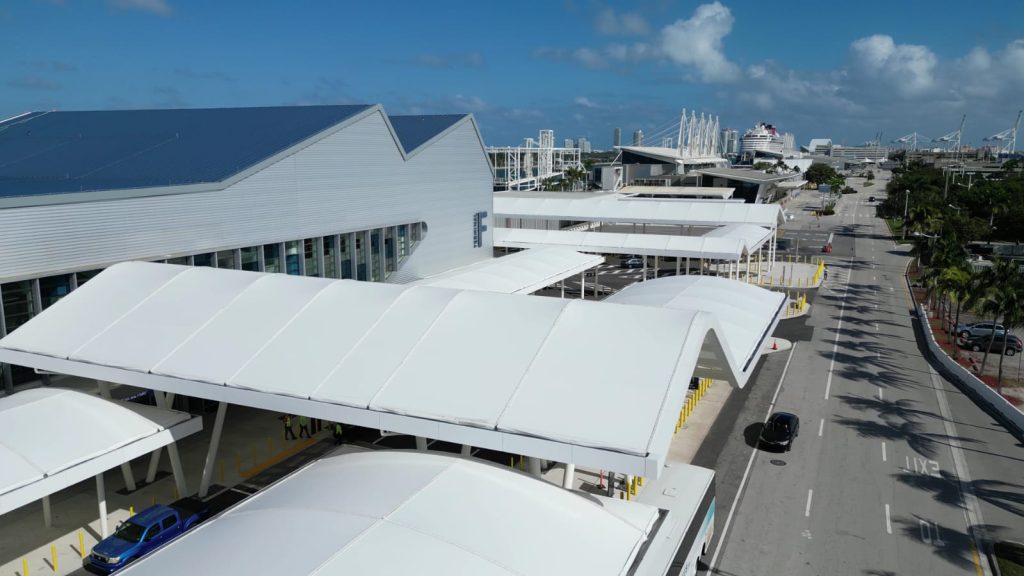
PTFE Construction in Modern Architecture
PTFE construction has become synonymous with iconic large-scale architecture. Tensile membrane systems can cover stadium seating, enclose airport terminals, and create visually striking civic structures.
Structural Flexibility
PTFE membranes can span hundreds of feet when properly engineered. Their flexibility enables:
- Free-form architectural shapes
- Column-free interior spaces
- Enhanced acoustics in performance venues
- Optimized crowd flow without obstructions
Fire and Safety Performance
Safety is non-negotiable in public venues. PTFE membrane systems are inherently non-combustible due to their fiberglass base. This provides an added layer of security and compliance with stringent building codes.
Weather Resistance
From high winds to heavy snow loads, PTFE construction is engineered to handle extreme environmental conditions. Proper tensioning allows snow to shed efficiently, while aerodynamic forms reduce wind uplift risks.
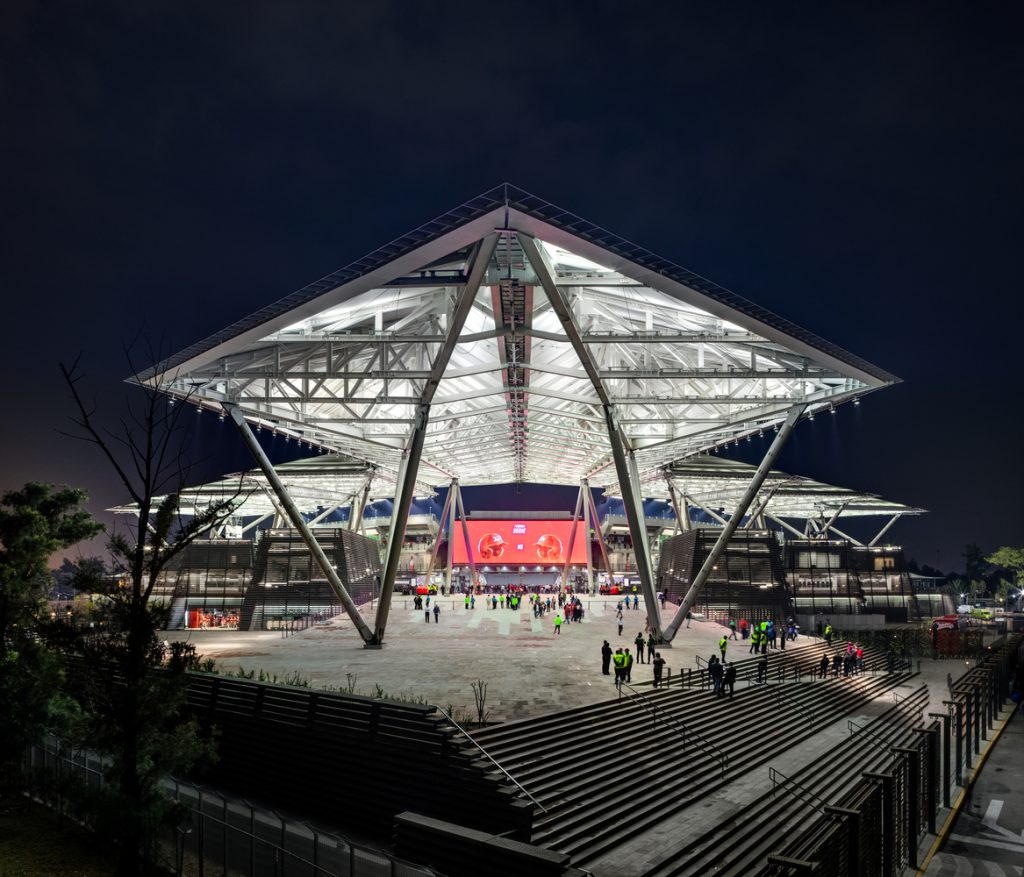
Applications of PTFE Membrane Systems
PTFE membranes are widely used in projects where performance and visual distinction are critical.
Common applications include:
- Sports stadiums and arenas
- Airports and transportation hubs
- Convention centers
- Amphitheaters and performance spaces
- Exhibition halls
- Large-scale commercial developments
In each of these environments, PTFE construction provides a reliable solution capable of meeting high occupancy demands and exposure to constant environmental stress.
FAQs | PTFE membranes
How long does a PTFE membrane roof last?
A properly designed and installed PTFE membrane roof can last 30 years or more. Its resistance to UV radiation and environmental wear contributes to its extended lifespan.
Is PTFE construction suitable for extreme climates?
Yes. PTFE construction performs well in a wide range of climates, including areas with heavy snow, high winds, and intense sunlight. Its durability and tensile strength make it highly adaptable.
Does a PTFE membrane require regular maintenance?
Maintenance requirements are minimal. The self-cleaning surface reduces dirt accumulation, and periodic inspections are typically sufficient to ensure continued performance.
Can PTFE membranes be customized for unique designs?
Absolutely. PTFE construction enables the creation of complex, custom-designed tensile structures tailored to the architectural vision of a project.
Is PTFE environmentally friendly?
PTFE membranes enhance energy efficiency through their high solar reflectivity and natural light transmission. Their long lifespan also reduces material waste compared to shorter-lived alternatives.
 English
  Spanish