

Table of Contents
With innovative materials and designs emerging, the roof canopy of a stadium can transform an ordinary venue into an extraordinary landmark. From sleek curves to intricate patterns, these structures showcase creativity while fulfilling practical needs.
As cities around the world embrace modern architecture, some stadiums stand out with their unique roof canopies. Let’s explore three remarkable designs that push boundaries and redefine what we expect from sporting venues.
What is a Roof Canopy?
A roof canopy is an architectural feature that extends beyond the main structure of a building, often providing shelter and protection. In stadiums, these canopies serve not just to shield spectators from rain or sun but also to enhance acoustics and improve airflow.
They create an inviting atmosphere for fans while maintaining visibility for players on the field.
Advantages of lightweight materials in a stadium roof
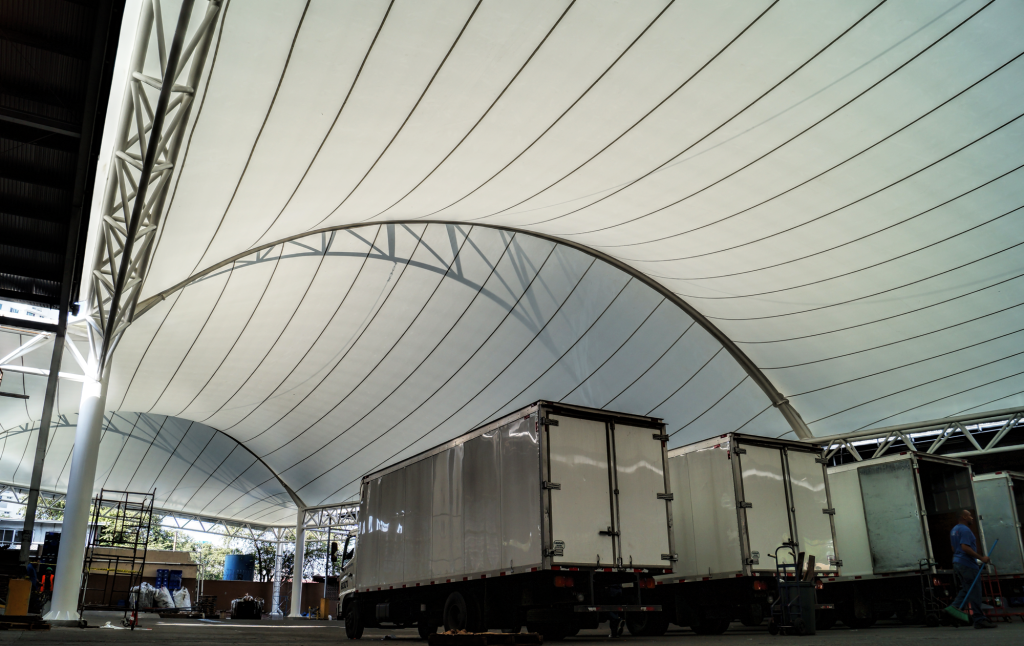
Lightweight materials such as ETFE, PTFE, PVC, and MESH offer significant advantages for stadium roofs by reducing structural demands, improving sustainability, and enabling architectural solutions. At Dunn Lightweight Architecture, we specialize in these materials, emphasizing their durability, strength, aesthetics, and eco-friendly attributes.
Lightweight Materials: Key Advantages
- Reduced Structural Load and Foundation Costs
Lightweight materials ease the demands on a stadium’s structure by weighing less than traditional options, resulting in lower foundation and framing costs and enabling longer roof spans without internal supports. - Sustainability and Environmental Impact
Employing fully recyclable materials, which minimizes the use of conventional building components, thereby decreasing CO2 emissions and their environmental footprint. Lightweight structures help projects achieve LEED certification and other green building standards. - Design Flexibility and Aesthetics
These materials allow architects to create visually impressive, dynamic forms for stadiums that would be difficult or impossible to achieve using heavier elements. Our projects showcase architectural creativity and versatility through bespoke solutions. - Faster Construction, Lower Costs, and Minimized Maintenance
Modular, prefabricated lightweight systems, such as tensile fabric, can be installed rapidly, minimizing construction time and labor. Low maintenance needs and high durability further reduce life-cycle costs. - Natural Lighting and Comfort
Materials like ETFE are transparent, allowing natural daylight into the stadium while providing weather protection, improving energy efficiency, and spectator comfort.

3 Innovative Roof Canopy Designs for Stadiums
Stadiums are evolving, with roof canopies becoming essential for enhancing the spectator experience. These structures provide shelter from elements while amplifying acoustics and improving visibility.
1. Weidner Field, Colorado, USA
Weidner Field in Colorado Springs, USA, is an 8,000-seat, state-of-the-art soccer-specific stadium that serves as home to the Colorado Springs Switchbacks FC of the USL Championship. It opened in April 2021 as part of downtown revitalization efforts and features multipurpose use, including concerts and various events, with capacity expandable to 15,000.
The stadium stands at about 6,035 feet elevation, making it notably the highest professional soccer stadium in the U.S. It includes high-quality amenities such as VIP suites and a prominent stainless steel sculpture called “The Epicenter” symbolizing the city’s sports heritage.

Dunn Lightweight Architecture contributed to the project by designing tensile canopies for the seating areas using PVC material, ensuring the structure met strict building codes, withstanding heavy snow loads without obstructing spectators’ views.
2. Estadio Cuahutemoc, Puebla, Mexico
Estadio Cuauhtemoc, located in Puebla, Mexico, is a historically significant and modernized football stadium that serves as the home of Club Puebla. It has 51,726 seats after its renovation in 2014-2015.
Estadio Cuauhtémoc was originally constructed in 1967 and underwent extensive modernization between 2014 and 2015. It has hosted significant matches, including games during the 1970 and 1986 FIFA World Cups, and holds a deep cultural significance within the region.
A standout feature of the renovation was the installation of a fully covered ETFE (Ethylene Tetrafluoroethylene) facade, making it the first stadium in Mexico and Latin America—and one of the first globally—to have an entire facade composed of ETFE, which is approximately 95% lighter than glass.
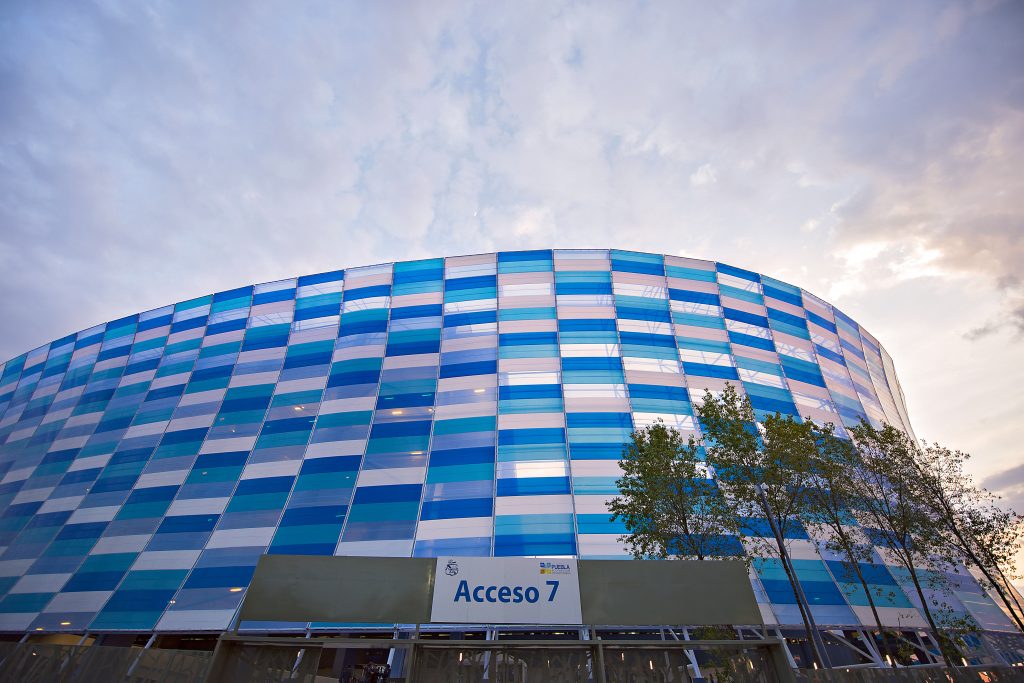
The facade is composed of 124 vertical panels, designed to resemble a mosaic in varying shades of blue and white, paying tribute to Puebla’s renowned Talavera craftsmanship. By night, the facade is illuminated with vibrant LED lighting that accentuates its mosaic effect.
ETFE was selected for its exceptional durability, flexibility, UV resistance, and lightweight nature—being roughly 100 times lighter than glass. Its translucency allows more natural light to permeate while reducing the weight of the supporting metal framework by about 40%, yielding both cost savings and greater architectural freedom.
3. Ahmed Bin Ali Stadium, Doha, Qatar
Ahmed Bin Ali Stadium in Doha, Qatar, is a modern, 40,000-seat open-air venue that served as one of the stadiums for the 2022 FIFA World Cup. The stadium is located about 22 km west of Doha and replaced the previous structure built in 2003, expanding capacity from roughly 21,000 seats to 40,000 for the tournament, with plans to reduce to around 20,000 seats post-World Cup.
The Ahmed Bin Ali Stadium in Doha, Qatar, showcases a stunning roof canopy that combines form and function. This stadium is not just remarkable for its design but also for its innovative use of sustainable materials.

Dunn Lightweight Architecture contributed specialized lightweight fabric solutions to the project, including the implementation of a temporary PVC wall to facilitate the efficient operation of the stadium’s cooling system, a PTFE laminated mesh inner roof to allow the proper propagation of UV light for the playing field, and a windbreaker mesh to mitigate the effects of hot winds. These solutions demonstrate innovative adaptations to environmental conditions and stadium performance requirements.
 English
  Spanish
Pingback: ETFE Roof Solutions for Sports Architecture - Dunn
Pingback: PVC Roof Technology: Advancing Stadium Covers - Dunn