

Table of Contents
The world of sports architecture is evolving, and at the forefront of this transformation are ETFE roofs. Ethylene tetrafluoroethylene, or ETFE for short, is a lightweight yet incredibly durable material that has revolutionized the construction of stadiums and arenas.
As architects seek innovative solutions to create striking designs that can withstand the elements, ETFE stands out as a versatile option. From iconic stadiums to multipurpose arenas, this advanced roofing solution combines modern technology with unparalleled performance.
Let’s delve deeper into the remarkable properties of ETFE and examine why it’s becoming an increasingly popular choice in sports architecture today.

ETFE Roof Solutions for Sports Architecture
ETFE roof solutions are rapidly gaining popularity in sports architecture due to their exceptional characteristics. This lightweight material is not only durable but also highly resistant to extreme weather conditions, making it ideal for outdoor venues. Its flexibility allows architects to create stunning designs that can adapt to various shapes and sizes.

ETFE Properties
Ultra-Lightweight with Structural Efficiency
- Very low mass per area enables coverage of large spans with minimal supporting structure and reduced foundation load, offering cost and schedule advantages versus heavy traditional glazing or metal roofs.
High Light Transmission & Visual Comfort
- ETFE films transmit up to ~90–95% of visible light, allowing natural daylight to penetrate deep into the interior space. This enhances spectator experience while reducing the need for artificial lighting during daytime events.
- Translucency can be tailored (clear, fritted, screened) to control solar heat gain, glare, and daylight quality.

Flexibility & Form Freedom
- The elasticity and flexibility of ETFE allow complex curved roofs, canopies, and pneumatic cushion assemblies, enabling iconic forms that become city landmarks.
- You can specify single-layer film systems for simple coverage or multi-layer cushion systems (pneumatic) to improve insulation and create distinctive surface geometry.
Durability in Exterior Environments
- ETFE exhibits outstanding resistance to UV, weathering, and temperature extremes, with typical architectural service lives in the 25–35 year range with minimal loss of performance.
- Self-cleaning behavior due to low surface tension reduces maintenance costs and helps maintain high light transmission over time.
Thermal and Acoustic Characteristics
- The thermal performance of a single film is limited; cushion designs with multiple layers and controlled air pressure improve insulating performance.
- Stadium roofs built with ETFE may require integrated acoustic treatments or structural design responses if rain noise or ambient stadium noise control are performance drivers. (Acoustic considerations are often addressed at the system level rather than via material alone.)

Aesthetic & Branding Flexibility
- ETFE can be produced in clear, tinted, printed, and illuminated configurations, enabling dynamic night-time lighting effects and brand integration (logos, team colors) without opaque cladding.
ETFE Applications in Architecture
ETFE, or ethylene tetrafluoroethylene, has transformed architectural design in recent years. Its lightweight nature and high strength make it an excellent choice for various applications beyond sports stadiums.
1. Lightweight Roofs and Canopies
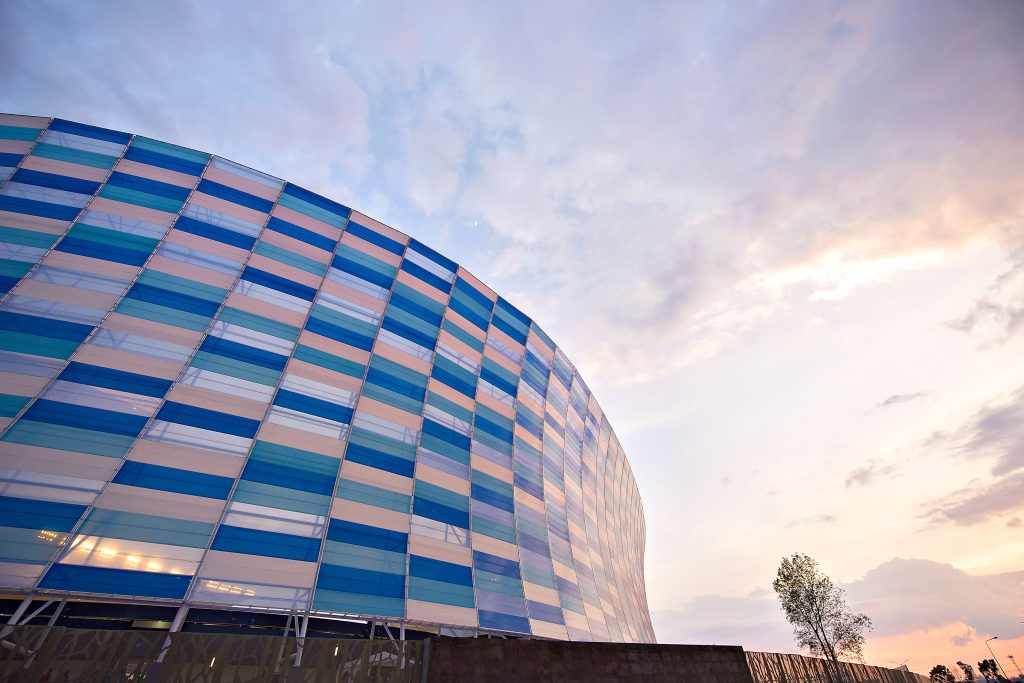
ETFE membranes are used to create large-span roof systems that require minimal support structure, offering a significant reduction in steel tonnage and embodied carbon. These lightweight roofs are ideal for stadiums, transit hubs, and public gathering spaces, providing weather protection while delivering natural light and visual openness.
The Estadio Cuauhtemoc and Estadio Azteca projects include ETFE elements that showcase roofing and enclosure solutions with reduced structural demand and enhanced daylight.
2. Transparent and Translucent Façades
ETFE’s inherent light transmission makes it suitable for façade applications where visual expression and daylighting are priorities. Its translucency also enables even diffuse light distribution, improving interior comfort and reducing reliance on artificial lighting. ETFE façades can be printed, tinted, or patterned to reinforce brand identity or architectural intent.
Dunn LWA Examples:
- Museo Rafael Coronel showcases expressive ETFE.
- El Toreo (ETFE commercial façade)
- Dragonfly Museum (ETFE façade combined with mesh/PVC)
Moreover, ETFE’s ability to be customized in terms of color and translucence opens up opportunities for creative expression in architectural design. Stadiums can reflect their team’s identity or local culture through vibrant façades that engage fans even before they enter the venue.

FAQs | ETFE Roof Solutions
What is ETFE?
ETFE stands for ethylene tetrafluoroethylene, a type of fluoropolymer known for its remarkable durability and transparency. This lightweight material can be used in various architectural applications, especially in sports facilities.
How durable is an ETFE roof?
ETFE roofs have excellent resistance to extreme weather conditions, UV radiation, and chemicals. They can last over 30 years with minimal maintenance required.
Is ETFE energy-efficient?
Yes! One of the standout properties of ETFE is its ability to provide thermal insulation while allowing natural light penetration. This makes it energy-efficient compared to traditional roofing materials.
What types of structures benefit from an ETFE roof?
While commonly used in sports architecture like stadiums and arenas, ETFE roofs can also enhance other buildings, such as greenhouses, exhibition centers, or any structure requiring expansive skylights or coverings without compromising on aesthetics or functionality.
Why Choose ETFE for Sports Stadiums?
ETFE (Ethylene Tetrafluoroethylene) has become a preferred material for modern sports stadiums due to its ability to meet the combined demands of large spans, performance efficiency, durability, and architectural impact. For venues where structure, experience, and long-term operation must align, ETFE offers clear advantages over traditional roofing and façade materials.


 English
  Spanish